Board of Directors

Jon Haufler, President
Jon is executive director of the Ecosystem Management Research Institute, an independent, non-profit institute that specializes in large-scale conservation planning using ecosystem-based approaches. Jon holds B.S., M.S., and Ph.D. degrees in wildlife biology and was a wildlife ecology professor at Michigan State University and a wildlife and ecology program manager for Boise Cascade Corporation. He currently serves as vice president of The Wildlife Society. Jon lives in Montana.
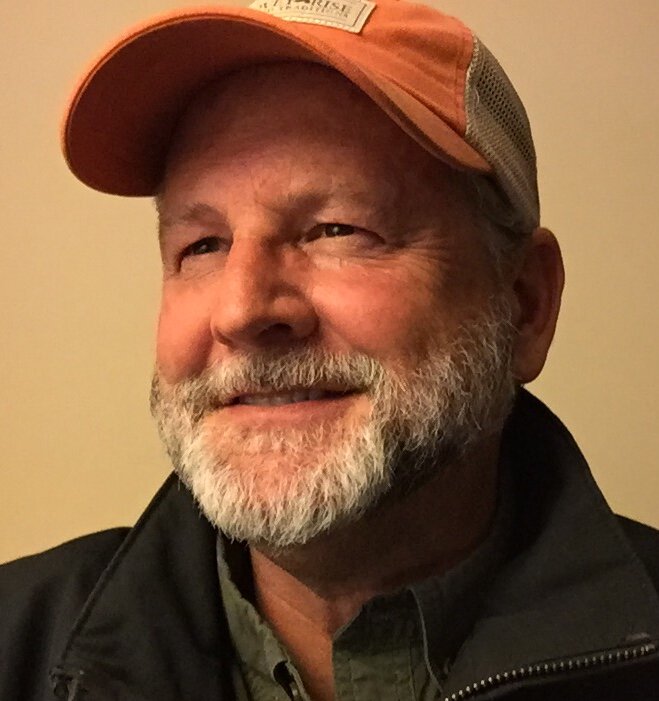
Lew Carpenter, Vice President
Lew is the National Wildlife Federation Director of Conservation Partnerships in the Rocky Mountain Region. In this role he advises the NWF affiliate board directors in CO, NM, AZ and NE on leadership cultivation, capacity building and programmatic work (policy advice on regional and national issues) - where these groups should weigh in politically in their region to effect results. He also maintains a moderate role working with NWF’s Austin office on restoring Louisiana wetlands.
At the end of the day, Carpenter’s job is about ensuring the long-term effectiveness of NWF and its affiliates by building strong organizations, developing and supporting effective leadership, and creating strong networks of influential people to achieve national and regional conservation victories.
Prior to his work at NWF Carpenter produced hunting television shows – TRCP’s Life in the Open, The Federal Experience and The Bucks of Tecomate with Jeff Foxworthy; was editor of Western Outdoors magazine for nearly a decade; and worked as a traditional journalist at newspapers and a wire service in Southern California. Carpenter grew up in Greeley, Colorado and earned a B.A. in Political Science from Arizona State University.

Steven P. Riley, Secretary
Steve is a certified wildlife biologist, an alumnus of the National Conservation Leadership Institute, and a multiple-degree alumnus of South Dakota State University. Steve has served as Assistant Coordinator of the Northern Great Plains Joint Venture with Ducks Unlimited and prior to that, coordinator for conservation delivery for the Oaks and Prairies Joint Venture with the Texas Parks and Wildlife Department. He also led conservation efforts, working as a Private Lands Coordinator and upland game biologist for South Dakota Department of Game, Fish and Parks and as assistant wildlife administrator for Nebraska Game and Parks Commission. He also worked for several years at Pheasants Forever and Quail Forever as a Field Director. Well-versed in private lands wildlife management, agricultural policy, partnership building, and leadership, Riley currently is the Chief Conservation Officer for American Bird Conservancy in Gretna, Nebraska. Steve previously served NAGP as Executive Director of the Grouse Partnership in a volunteer capacity.
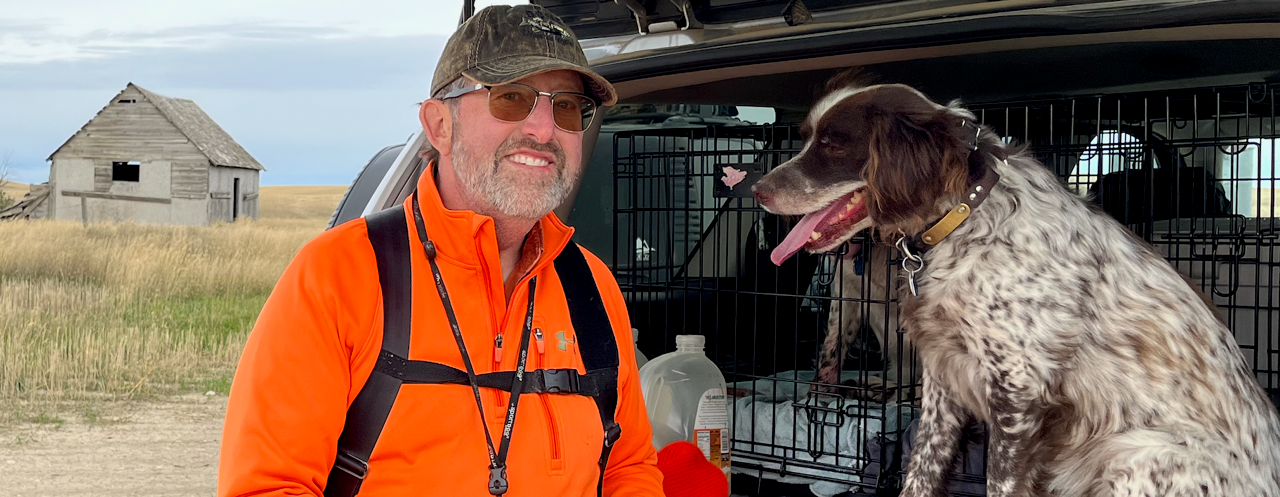
James Rice, PhD, Treasurer
Jim is Emeritus Professor of Chemistry and Biochemistry at South Dakota State University (SDSU). He received a B.A. in natural sciences from St. John’s University (Collegeville, MN) and M.S. and Ph.D. degrees in geochemistry from the Colorado School of Mines. He served as a postdoctoral research associate in the chemistry department at the University of Maryland-College Park. He was a faculty member at SDSU for 28 years, serving as Department head from 1999-2015. His research focuses on the molecular mechanisms of carbon sequestration in prairie soils. His studies have resulted in over 100 peer-reviewed publications and $16 million in competitive grant awards as principal investigator. He was an Associate Editor of the journal Organic Geochemistry from 1995-2016.
His experience in the nonprofit sector includes service from 2002-2017 as the executive director of the SD EPSCoR program, a state-wide nonprofit 501c(3) corporation whose goal is to expand STEM research capacity by building research and workforce development partnerships between universities, state government, and the private sector. In this role he was project director on $57 million in nationally-competitive capacity-building grants. During this time Jim also served as a member of the South Dakota Governor’s Math, Science & Technology Council, the National Science Foundation’s Advisory Committee for Environmental Research and Education and also its Advisory Committee for Cyberinfrastructure, the Advisory Committee for the Great Plains Networking Consortium, and as Membership Coordinator for the International Humic Substances Society. He was as a Board member of the EPSCoR Coalition, a 501c(4) supporting the EPSCoR program nationally, from 2012-2017 and served as its Vice-president from 2016-2017.
Jim currently serves as a consultant for program/proposal development, project implementation, and project assessment. But because he is an avid upland hunter, he consults only enough to pay for this obsession – and his dogs!
Mark Benscoter
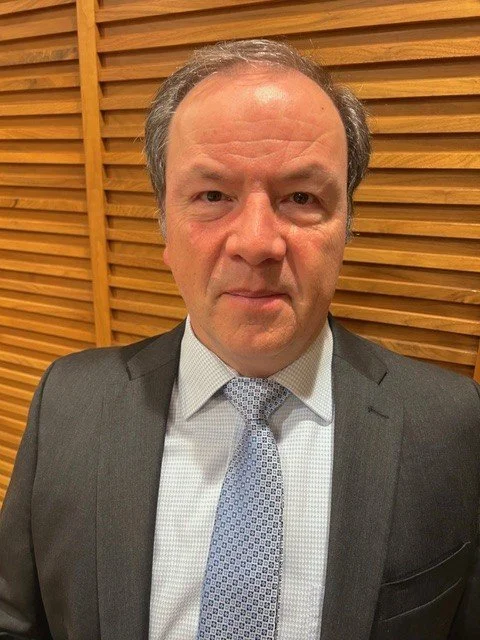
Mark is an active conservationist and non-profit leader. He currently serves in board leadership roles with local Pheasants Forever and Ruffed Grouse and American Woodcock Society chapters. His professional experiences include leadership roles of large national teams, scientific studies with peered reviewed publications, and multiple patents. Mark holds B.S., M.B.A., M.S., and Ph.D. degrees. Mark lives in Minnesota.

Dan Cecchini Jr.
Dan is a College administrator and small business entrepreneur. Earned a Bachelor’s degree in Biology and Master’s degree in Basic Science. Also earned Bachelor’s degree in Computer Science and an MBA in operations management. Raised funds and did news interviews to promote Peregrine Falcon reintroduction in Colorado during the 1980’s, received award from the Colorado Peregrine Partnership in 1987 in recognition of those efforts. Formed the Oregon Chapter of NAGP; elected to the NAGP Board of Directors in 2009, elected as Secretary of NAGP in 2012. Spend significant time over past several years coordinating and submitting written comments for commercial wind energy development on BLM lands in the west, particularly Oregon, that impact sage grouse. Wrote an e-book for laymen on impact of commercial wind energy on grouse populations. Currently the US Delegate to the International Association for Falconry and Conservation of Birds of Prey. Served as the US representative to the International Falconry Festival in the Abu Dhabi in 2011, celebrating the UNESCO decision to recognize falconry as an intangible cultural heritage. Consulted with the US Air Force falconry mascot program during 1980-90s; donated captive bred prairie falcons to the US Air Force for use as flying mascots for the Academy. Participated in the White House Conference on North American Wildlife Policy in 2008. Past president and vice-president of the North American Falconers’ Association, as well as the NAFA Journal Editor for 20 years; awarded the NAFA Freienmuth Award and Honorary membership in 2010; serve on various NAFA committees. Active member of Oregon Falconers Association and serve on association committees. Founding member of the Michigan Hawking Club in 1972 and the Texas Hawking Association in 1983. Licensed as Master Falconer since 1978, practicing falconry under state and federal permits since 1970.
Randy Dahl
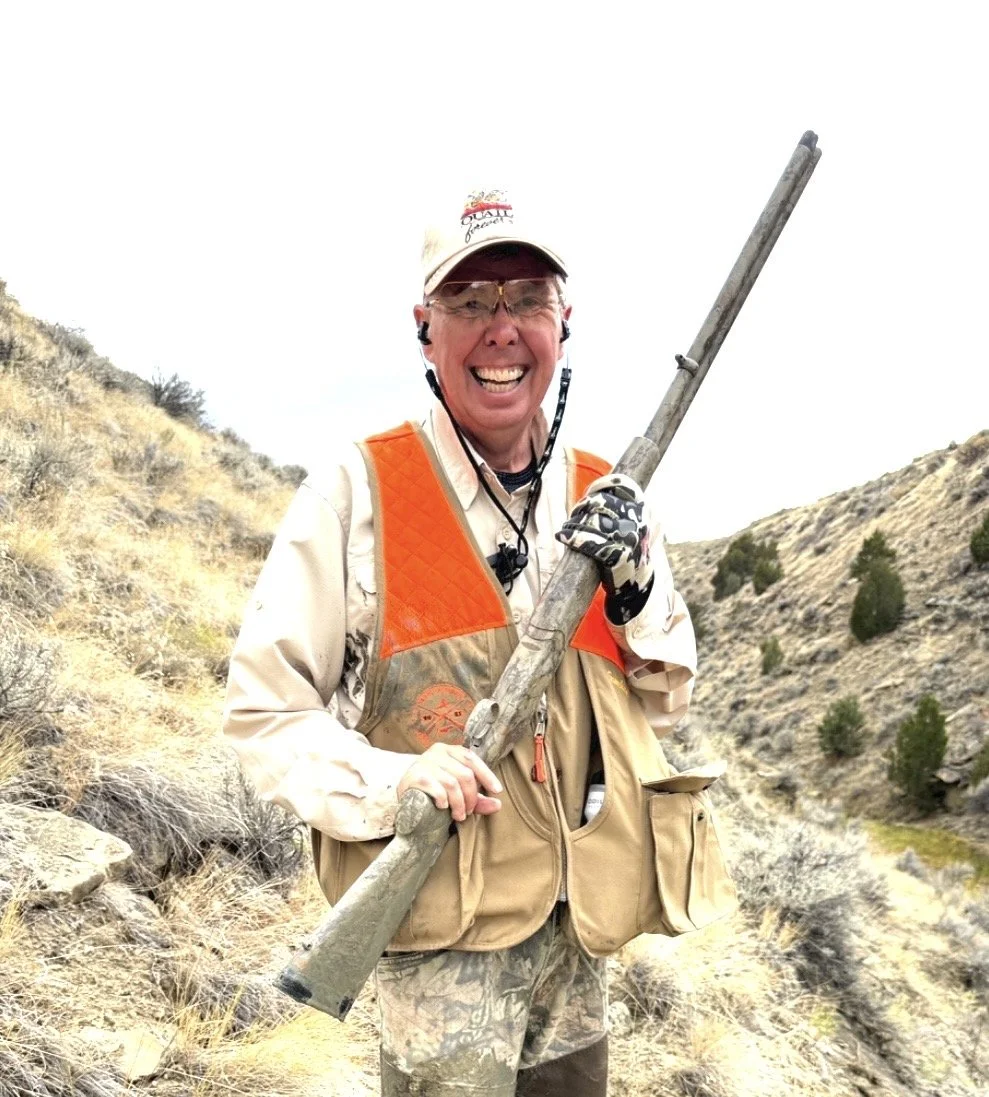
Randy Dahl is an engineer, entrepreneur, and lifelong conservation advocate whose career blends technical innovation with a deep commitment to North America’s wildlife and habitats. Raised on his family farm in rural Storlie Township, North Dakota, Randy developed an early connection to the land through farming, hunting, and fishing—experiences that shaped his enduring dedication and interest to wildlife stewardship.
Randy earned his B.S. and M.S. in Electrical Engineering from North Dakota State University, where his graduate research focused on precision optical instrumentation. His engineering career began at Motorola’s Government Electronics Group, contributing to advanced electronic and opto‑electronic systems for defense applications. Over the course of his early career, he was awarded ten U.S. patents for engineering innovations.
In 1994, Randy founded Industrial Fiber Optics, Inc., where he serves as President and Chief Technology Officer. Under his leadership, the company grew from an educational fiber‑optics manufacturer into the largest value-added plastic optical fiber and cable producer in North America, expanding from fiber optics and laser education products, to engineering fiber optic components, and recently vertically integrated capabilities making fiber terminations for internal use and others. His work reflects a lifelong ability to identify opportunity, innovate, and build sustainable systems—skills he now applies to conservation leadership.
Randy’s conservation involvement spans more than three decades across multiple organizations. He has served Ducks Unlimited in roles ranging from fundraiser and committee member to State Treasurer, and he is also a Grand Slam Life Sponsor which includes DU Canada and Ducks Unlimited de México. His commitment extends to Pheasants Forever and Quail Forever as a Patron Slam Sponsor, and he currently serves as President of the Valley of the Sun Quail Forever Chapter.
In Arizona, Randy has played an active role in statewide conservation initiatives through Anglers United, Wildlife for Tomorrow, and the Arizona Sportsmen for Wildlife Conservation Council, where he is vice president and a life member. He has contributed to youth fishing programs, habitat projects, and sportsmen’s policy efforts, and participates in advisory roles including the Arizona Game and Fish Fair Chase Committee and the Arizona Livestock Loss Board.
Randy brings to the North American Grouse Partnership a lifelong passion for upland birds, a strong grounding in agricultural land management and stewardship, and decades of leadership in conservation organizations. His blend of technical expertise, innovation vision, perseverance and hands‑on experience with habitat, wildlife, and community engagement strengthens NAGP’s mission to conserve grouse species and the landscapes they depend on.

Willard Heck
As manager of Weaver Ranch, Willard has spent the last 19 years working with wildlife habitat management, overlaying traditional ranching practices on large scale southern Great Plains land in ways that help sustain wildlife, particularly the lesser prairie chicken and other grassland bird life. Prior to that, he spent 18 years working for The Peregrine Fund, Inc., where he specialized in the captive propagation of rare raptors, used to reestablish extinct or diminished wild populations. He was also involved in the early establishment of captive Aplomado falcon production and spent 10 breeding seasons on the Indian Ocean island of Mauritius, working to stabilize populations of the Mauritius kestrel. Heck is also secretary of the Grasslands Charitable Foundation and helps organize the annual High Plains Prairie Chicken Festival, in his home state New Mexico.
Chris Madson

Chris resides in Cheyenne, WY. He began his academic training with an A.B. in biology and a minor in English at Grinnell College in Iowa, then continued with an M.S. in wildlife ecology from the University of Wisconsin. He began his career with the Kansas Fish and Game Commission where he spent six years as the editor of KANSAS WILDLIFE magazine. In 1983, he moved to Cheyenne, Wyoming, to assume the editorship of WYOMING WILDLIFE magazine with the Wyoming Game and Fish Department, a position he occupied for thirty years before retiring in 2013.
Chris has contributed nearly 500 articles to other regional and national conservation publications. He is the recipient of the National Wildlife Federation’s Conservation Achievement Award, the Ducks Unlimited Conservation Communicator of the Year Award, and the Excellence in Craft award and the Jade of Chief award for contributions to conservation from the Outdoor Writers Association of America.
He has spent his entire adult life in a love affair with the big sky and grasslands of the Great Plains.
Stephanie Manes
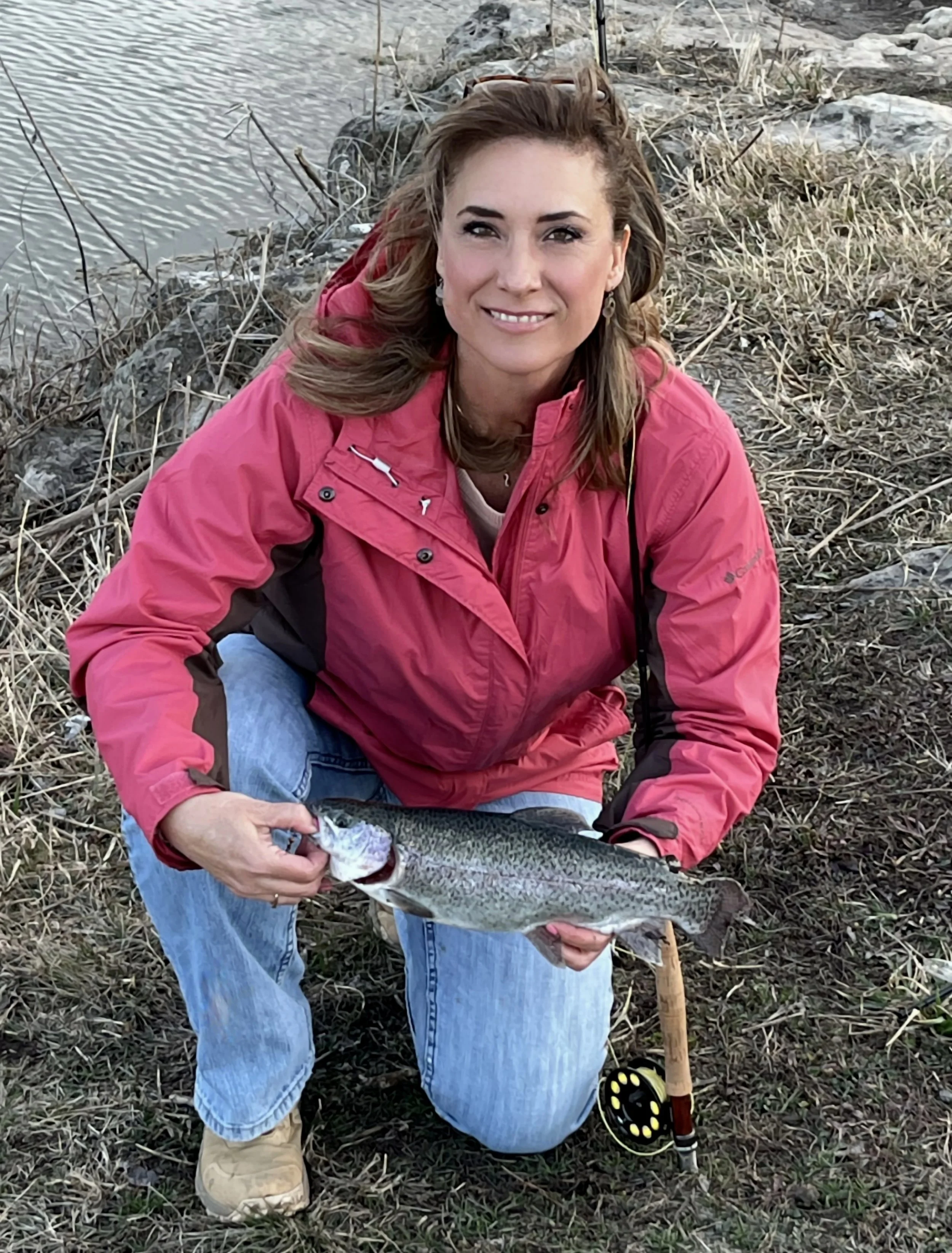
Stephanie Manes has been a professional wildlife biologist and TWS member for nearly 30 years. She received a B.S in wildlife ecology (minoring in range management and fire ecology) and a M.S. in conservation genetics from Oklahoma State University. From 2000 – 2009 she was an endangered species coordinator for the USFWS in Tulsa, OK, leading the species status review for Lesser Prairie-chicken and consulting with agencies on management plans for black-tailed prairie dog, swift fox, BLM wild horses, and grazing management plans for BLM and the Rita Blanca/Cimarron National Grasslands.
In 2008 she moved to KS as the conservation easement coordinator for the Ranchland Trust of KS, a land trust affiliate of the KS Livestock Assoc. She completed nearly 35K acres of easements and habitat improvement projects in central KS and the Flint Hills. In 2016 she began a consulting business for prairie conservation and endangered species mitigation banking. Since 2022 she’s worked at Ft. Riley as an Environmental Protection Specialist coordinating NEPA reviews and the conservation easement buffer program to prevent encroachment and protect wildlife habitat near Ft. Riley. In 2024, she served as the TWS Central Mountains and Plains Committee Chair to review national TWS policy in support of the N.A. Model of Wildlife Management.
Stephanie’s professional goal is to continue to conserve all species of prairie grouse, and to expand the use of voluntary, perpetual conservation easements and economic opportunities for landowners through private ecosystem service markets. These are a high priority in the Great Plains due to the lack of public land. By serving on the Board of NAGP she would like to meet new friends and colleagues and contribute back through her experience and mentorship.
In her spare time, Stephanie likes to hunt, hike, kayak, and lose arrows in the grass at archery tournaments. She lives in Wamego, KS with her daughter, Evelyn, and son, Daniel.

Jordan Martincich
Jordan joined the Board in June 2024. He is a passionate upland bird hunter and prairie grouse lover with significant conservation sector leadership experience. He is member of the Pheasants Forever and Quail Forever’s team where he serves as the organization’s Vice President of Development.
Jordan said it is an honor to join the NAGP Board of Directors and that NAGP is a small but mighty organization that has been punching above its weight for many years. He looks forward to helping NAGP expand its reach for the benefit of grouse, the ranching community, and future generations.

Ralph Rogers
Ralph is one of NAGP’s previous executive directors and is a retired educator. He received the Montana Wildlife Federation’s conservation educator of the year award and his biology field program methodology was published in Phi Delta Kappa’s Outstanding Practices series. He currently owns two small businesses: a biological consulting firm and an aircraft brokerage company. As a biologist, Rogers has been a frequent contributor to published natural history literature about the peregrine falcon; studies with fieldwork that took him from Greenland to Tierra del Fuego. Rogers is also a past president of the North American Falconers Association, as well as the current vice president of the International Association for Falconry. Ralph lives in Montana.

James Weaver
Jim owns Weaver Ranch and Milnesand Grass-Fed Beef, LLC. He also served as a commissioner with New Mexico’s Game and Fish Commission, was a founding member and director of The Peregrine Fund, Inc. and president of the Grasslans Charitable Foundation. Jim lives in New Mexico.
Emeritus Board Member, Dr. Rollin D Sparrowe

Rollie is a certified wildlife biologist with more than 45-years of experience working with state and federal wildlife agencies. During his 22-year career with the U.S. Fish and Wildlife Service, Dr. Sparrowe served as chief of the Cooperative Fish and Wildlife Research Unit, chief of the Migratory Bird Management Unit, chief of the Wildlife Research division and as deputy assistant director of Refuges and Wildlife. He is a past president of The Wildlife Society, and a 2002 recipient of their Aldo Leopold Award. Since retiring in 2004, he continues his work of blending science and resource management through work on the wildlife impacts of energy development. Rollie lives in Wyoming.